The following is my Senior Year Animoto that I made over the 2016-2017 school year. Please Enjoy!
Monday, May 15, 2017

Monday, April 3, 2017
Field Trip to SMU and the President George W. Bush Museum and Library
The following blog assignment can be found here.
 |
| Allison and I at SMU |
Click here to visit the Department of Teaching and Learning to learn more about SMU's education program.
After visiting SMU, we walked over to the Bush Memorial Library. Not having a lot of knowledge on the United States' presidential history, I learned a lot about our 43rd president, George W. Bush. I enjoyed learning about President Bush's famous Education Initiative. George W. Bush implemented reforms that held schools accountable for teaching all children and for reducing the achievement gap. After being elected President of the United States, George Bush submitted to Congress a comprehensive education reform plan-No Child Left Behind- to take his ideas on accountability to the national level. The key aspects of this Education Initiative included accountability, local flexibility, systems that work, and meaningful options.
Click here to visit the President
George W. Bush Museum and Library website.
 |
| Allison, Makayla, Tiana and I in front of the Education Initiative exhibit. |
 |
| Allison and I in the oval office. |
 |
| These were metal posts that were in one of the twin towers during 9/11 |
The most interesting part for me in the library was the 9/11 exhibit. I learned a lot, and got to see many artifacts about this devastating day. It was very interesting watching video clips of that day, and the exact order of events that happened and their exact time. We got to see all of the names of the first responders, and even got to read the exact schedule of George W. Bush's day. I had previous knowledge on this day in history however, I got to see an inside look on how it affected the Bush Presidency and the whole nation.
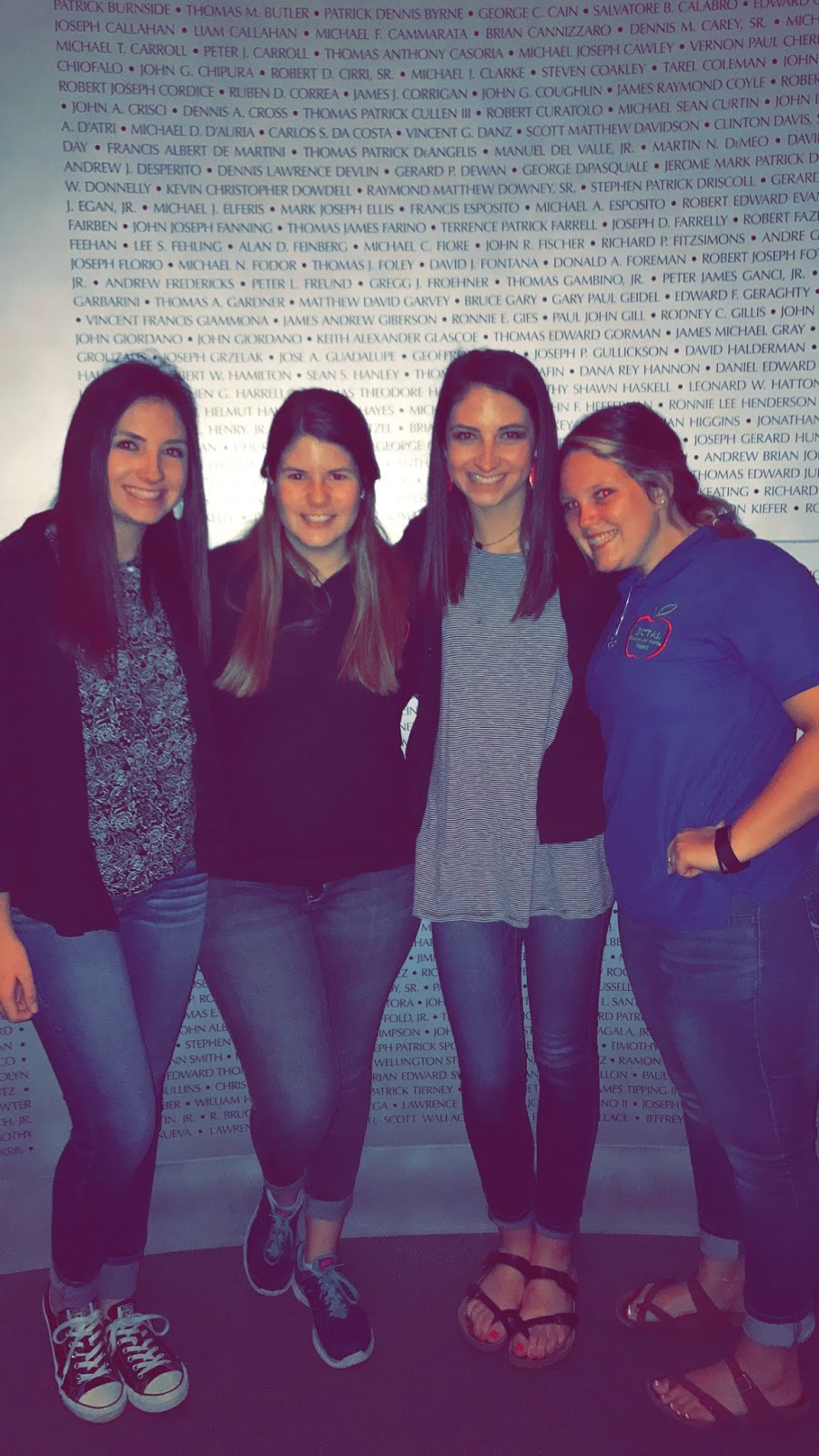 |
| Allison, Tiana, Makayla and I in front of the names of the First Responders of 9/11 |
Tuesday, March 28, 2017
Working the Crowd and Room Arrangement (Chapters 1-4)
The following blog assignment can be found here.

In our Education and Training class, the second year interns are doing a book study over Fred Jones's book, "Tools for Teaching". After reading chapters 3 and 4, I have gained a lot of knowledge on arranging a classroom in order to work the crowd the easiest. I am so excited to continue reading this book and widen my knowledge on professional teaching techniques!
Chapter 3- In this chapter, I read about ways to work the crowd, so the crowd does not work me instead. I learned that a teacher's mobility is very important, and it is a subconscious activity. Eye contact is very important in addressing issues in a classroom in order to avoid a disruption or embarrassment of the students. In my field site classroom, I think there are a few obstacles that make it difficult to work the crowd. First, even though the desks are in groups, the walkways are very narrow and difficult to get through without the students having to move their chairs closer to the table. There is also not a good zone to walk to check on all of the students without having to make several figure eights. I think these flaws in my field site classroom allow the students to goof off because the teacher would not be able to address the problem very quickly, each table is difficult to get to, and it can be difficult to check on all of the students in a short amount of time.
Chapter 4- According to Jones, the teacher's desk should go in the front of the classroom, 5 feet away from the students in the front row. The teacher may feel claustrophobic, but "will soon come to appreciate the intimacy and control that proximity provides". In my field site classroom, I would probably put the teacher's desk in the back of the room, so the teacher can watch over each of the students and put troubled ones in the back to keep an eye on them. In the back of the classroom, the teacher can do work at his/her desk, but keep an eye on all of the students. The teacher's desk would not be in the way of the white board, and there would be plenty of space in the front of the classroom for activities. In the reading, Jones says that "eight feet is the difference between prevention and remediation whenever you are standing in the front of the classroom," and whenever the teacher is sitting in the back of the room, the teacher can be close to the students without blocking their eyesight by sitting in front of them. I think that this location for a desk would provide the benefits of being near the students, but would not intimidate them with the desk right in the front of the room. The teacher can be as close as 5 feet behind them, in which the students would "cool it" and not goof off.
Click here to view information on this book and the author.
Thursday, December 8, 2016
Absences Add Up
The following blog is in response to the assignment that can be found here.
Absenteeism is a difficult issue that many teacher's have to deal with. Although this is a large problem, there are a few ways to help solve this problem. You can click this link here to view common reasons why students are missing school, so you can get more information and help put a stop to it.

Three ways to help students avoid getting behind after missing a day or more of school:
1. Give the student extra homework to work on what was done the day that they missed, so they are not missing extra practice.
2. Have the student stay in from recess or free time to get caught up on work.
3. Video new lessons taught, so the absent student can watch the video, and not miss out on the full explanation on the new topic.
 To encourage good attendance, teachers can give awards or prizes to students who stay in good standing with attendance. For example, they could give a student a sticker each day they are present, and the stickers could be traded in for rewards. Giving certificates for good attendance could also encourage the students to come to school. An incentive like this would encourage the student to be present each day, so that they can receive the award for their attendance. I do not think that major consequences should be given to students who have poor attendance because, most of the time children have to miss because they are sick, or their parents are responsible for their absence. If the problem is getting out of control, I think talking to their parent or guardian would be necessary to try and help resolve the issue.
Friday, November 11, 2016
Teachers Go Beyond the Call of Duty- What's Your Calling?
The following blog post is in response to the assignment found here.
Teachers Go Beyond the Call of Duty -- What's Your Calling?
On November 5th, 2016, I participated in the Region XI TAFE Competition in four events. I competed in the ELF Test, Portfolio, Scrapbook and Breakout Sessions, and advanced in each of these competitions for state. I picked two of these competitions because I already had my portfolio (guidelines) completed from last year, and I had experience in the ELF Test from last year. I enjoy working in groups, so I though the Scrapbook (guidelines) and Breakout Session Competition (guidelines) would be something I would enjoy. I enjoyed competing in these four things, and I would not change one thing about the things I signed up for. In my group projects, each member worked diligently to get their part done, so I could not have picked any better members for these competitions. The biggest obstacle I encountered would have to be the lack of time that I had to prepare each of these projects. Even though the time span was long, it was difficult to finish three presentations, and prepare for another, in that time frame. The thing I enjoyed the best from these competitions, would be putting them together. Even though it was sometimes difficult because I'm a perfectionist, I enjoyed getting to see all what our chapter has done, and get to show that off to the judges. The thing that I didn't like the most was the difficulty in the group projects because, the members were in different class periods. It was hard planning and preparing these projects when we were not together. If I could change anything about my competitions or the process creating them, I probably would have spent a little more time preparing the scrapbook and the script, so I did not have to stress about, and prepare, the script last minute. Throughout this experience, I have gained a lot of responsibility, and trustworthiness. While working in a group, my team members were able to trust that I would get my part done, and I was responsible enough to finish it on time. After completing these projects, and my success at the region competition, I can not wait to go to the state conference. I am so excited! To prepare for the Teach Tomorrow Summit, I am going to focus on the scrapbook the most, since this is the competition that has way more requirements for state. All of my other competitions are finished for state, but I will need to perfect my presentations before I compete again.
Pictures
 |
| Portfolio Certificate |
 |
| Chapter Scrapbook Group and Certificate |
 |
| E.L.F. Test Competitors and Certificate |
 |
| Breakout Session Group and Certificate |
Friday, October 28, 2016
Wednesday, October 12, 2016
What Would You Do?
The following blog post is in response to the assignment that can be found here.
After reading the given scenarios, I am going to provide a solution for scenario 4. Below is the exact description of the scenario.
Scenario 4
 You are about to change into your field site attire and realize you have forgotten your field site shirt and name badge. The bus will be leaving in three minutes. You have on jeans with holes, and a low cut top. You saw Mrs. Picky, your BCTAL EAT teacher, at your field site yesterday. Since you think she will not be stopping by to visit interns at your field site, you hop on the bus without your EAT attire, taking your chances that you will not be discovered. After all, if your field site mentor teacher and principal don’t say anything, there is no harm done, right?
After being an intern for one full year, and already starting on my second, the solution to this situation greatly stands out to me. If this situation happened to me, I would do a few steps to make sure that I did the correct thing. First, I would text my EAT teacher and let her know that I forgot my proper attire, and ask what he/she would like me to do. Ideally, my teacher would quickly reply and I could follow the exact orders my teacher wants me to do for that day. If my teacher does not reply right away, I would not get on the field site bus, but instead get on the BCTAL bus and go to BCTAL for the day. As soon as possible, I would text my mentor teacher and let him/her know that I could not be there today, and apologize for the short notice. If my EAT teacher is at the BCTAL, I would stay in the classroom and work on any classwork that needs to be done, but if he/she is not there, I would work in the hallway or in the other teacher's classroom. I would stay for the designated class time before returning back to my high school.

Monday, September 26, 2016
My First Day as an Intern
The response to the following blog post can be found here.
 |
| Selfie from Allison and I's first day at our field site! |
First Day back as an Intern!
 |
| Mr. Crawford |
On September 13, 2016, I returned back to Walker Creek Elementary for my second year of interning. This year, I am interning in a First Grade classroom, with a teacher named Mr. Crawford. This is his 8th year of teaching. To see his website, click here. I prepared by adding and editing my "About Me" poster from last year. I made some changes, and brought it along with me. On the first day I wore jeans, my EAT button up shirt, and white converse. As soon as I walked in, I did my introduction, which only lasted about 2 minutes, but it did grab everyone's attention. When I first walked in, I felt extremely happy to be back in a classroom. I saw so many familiar faces and I was so excited to teach and learn with these new faces. During the time that I am in his classroom, I get to help the first graders with math. This worked out perfectly; math is my favorite subject! After talking to Mr.Crawford about the changes that take place in the students during a year in 1st grade, I think I am most excited to see how much the students will learn and develop during the 36 weeks in this grade level! I am most excited about being apart of their lives this year, and help teach them new things. This week in my classroom, I got to learn what the teachers and students do during a fire drill, see what responsibilities the first graders get in the library, listen in on their math book lessons each day, and I got to watch them quietly read alone for "stamina" for a record time of 12:00 mins. Many things happened this week, and I got to observe and see what happens in each new situation or lesson. After leaving, I was completely filled with joy. I cannot wait to go back this week and learn more about my new scholars, and see what they are capable of doing this school year!

Even though I am in the same school, last year and this year's internship is completely different! Last year, I was in kindergarten, and even though the grade level difference is just one year, 1st grade is way more complex. As of last year, the teacher continuously showed the students how to do things, but this year, the students are right next to the teacher, trying everything out and doing everything with him. The students this year have already greatly increased their maturity level, and they are way more self-sufficient than last year. Besides the students, the teachers also have big differences. My teacher this year is much more laid back, and relies on the students to problem-solve and work things out on their own. I can not wait to continue to see similarities and differences in these two classrooms and grade levels as the year goes on.
 |
| Picture of me in the classroom! |
Tuesday, August 30, 2016
My Plan of Attack
The following blog post can be found here.
Last year, I competed in the Ethical Dilemma and ELF Test Competitions, and made it to the State Competition for the Ethical Dilemma contest. Last year, I enjoyed working with my team, and I plan doing it again this year for the Scrapbook Competition.
 |
| This is a picture of my classmates and I at the Region Conference from 2015. Steps: 1. I will decide on the contests I plan on participating in. 2. I will decide who I will be working with on which contests (if they are group projects).3. I will plan what needs to get done, and work as hard as I can to get it completed before the Region Competition. 4. After I compete, and hopefully move on to the state level, I will work hard on preparing and perfecting my work before I compete again at state. |
Click here to view all of the TAFE Competitons.

- I will be doing the Chapter Scrapbook Contest (guidelines), the Breakout Session Contest (guidelines) and the Portfolio contest (guidelines). The Scrapbook and Breakout Session Contests will be done in a group, but the Portfolio Contest will be done by myself.
- I believe the scrapbook and the breakout sessions will take a while to complete, because there are a lot of events and materials that need to be included. My group and I will need to work very hard to get these done on time.
- The portfolio contest should not take quite as long because, most of the information is already on the portfolio, I will just have to add in more information as the time goes by.
- To be successful, I will need hard work and dedication from each of the group members.
Monday, August 29, 2016
Welcome to My Blog!
The following blog assignment can be found here.
School year 2016-2017 is now started! As I start my Senior year, I am so excited to see what this year will consist of.
 I am a student at Birdville High School, and am involved in the Education and Training Program at Birdville's Center of Technology and Advanced Learning. I am so excited to be involved in school organizations and experience new things as I take on my last year of high school. In a few weeks I will be going out to a new field site classroom, and I am so excited to meet my new students. Last year, I interned in a kindergarten classroom, and this year I plan on helping out in a first grade classroom. I can not wait to learn more about this new grade level, and experience what teaching first grade is like.
Follow my blog to watch my journey through my year as a Senior in the Education and Training program.

Tuesday, May 24, 2016
Monday, May 23, 2016
Monday, April 25, 2016
Book Study, Part 1 - The Smartest Kids in the World
Click here to view the following blog prompt.
Recently in class we started to read "The Smartest Kids in the World" by Amanda Ripley. I think this book is very interesting and a good book to read if you are interested in what it's like to be a foreign exchange student. I found interesting, and really enjoyed what I read through the first four chapters. I got introduced to the students: Kim, Eric and Tom, and I am very excited to read more about their experiences in Finland, Korea and Poland.
Recently in class we started to read "The Smartest Kids in the World" by Amanda Ripley. I think this book is very interesting and a good book to read if you are interested in what it's like to be a foreign exchange student. I found interesting, and really enjoyed what I read through the first four chapters. I got introduced to the students: Kim, Eric and Tom, and I am very excited to read more about their experiences in Finland, Korea and Poland.

 Out of the three characters, I think that I most relate to Eric. Eric is empathetic, and he always sees the positives in things. Even though lonely at the Korean school, he is very interested in the new culture around him. He enjoys math, and he worked hard in high school, taking rigorous courses. I view myself as Eric because I LOVE math, and I'm interested in new things. I am empathetic towards others, I try to stay positive in new situations, and I am pushing myself by taking difficult courses in high school. Eric's want for adventure stood out to me. After completing high school, instead of going to college, Eric wanted to try something new, and left his peers for a year. This took bravery and determination to travel and to study abroad.
The three different schools in Finland, Korea and Poland were very interesting to me. I learned that most of them are not like schools in the U.S., especially Korea. The way they taught and led things were very different. Out of the three schools, I think that the school in Finland would be beneficial to the United States. Finland offers a school that may be considered as "old-school". Even though the school does not use technology, I think that this would help the students in America to stay engaged and on task. The teachers in Finland are devoted and excited about teaching. I think teachers like this would benefit the learning envoiornment in the U.S., because if the teachers are promoting education, the children will enjoy it.
Click here to view an intrerview with the author of this book.
Tuesday, March 29, 2016
Swivl

Swivl Capture is a free app which is available to iPhone and Android users. This app is easily accessible.
This is an instructional video explaining how to use and set up this device with an iPad mini. The set-up process does not change with a normal iPad.
Above, is a video of Rebekah demonstrating and explaining the Swivl to her 2nd grade students.
To use Swivl, you must buy the device, then create an account to log into on the iPad. It is free to make an account, and you only have to provide your name, email, a password, and the country that you live in. You can upgrade your account to an Educator Pro Account, costing $5/month ($50 a year), or a Standard Pro account for the non-educators, costing $20 a month ($200 a year). You can also upgrade your account to a Team account, which you can contact sales@swivl.com for the pricing.
Below you can view the differences in the three accounts.
 You must be 14 years or older to make an account. After you make an account, you can view, share and export your previously made videos, upload videos, or make new ones. You can also create a project, or interact with your video by making a title for each of your videos, and cut the videos to make them shorter.
Below, are a few explanations of what Swivl offers.
1) In your project, you can add presentation slides and other media to your video.
2) With time stamped commenting, you can post time stamped comments for questions or feedback with varying privacy from public to private.
3) You can comment on a video, and give feedback to the owner, which is great for a group discussion.
4)You can also make notes in your video at certain time-frames, so you can go back and make changes to your presentation.
Below you can view the differences in the three accounts.

Below, are a few explanations of what Swivl offers.
1) In your project, you can add presentation slides and other media to your video.
2) With time stamped commenting, you can post time stamped comments for questions or feedback with varying privacy from public to private.
3) You can comment on a video, and give feedback to the owner, which is great for a group discussion.
4)You can also make notes in your video at certain time-frames, so you can go back and make changes to your presentation.
This is a video of a man using the Swivl camera.
There are many uses for teachers or students to use this app and device.
- If a student is absent, you can video yourself teaching a lesson, and have the absent student watch it the next day.
- If you are a student teacher, you can record yourself teaching to get feedback, and recognize what you may need to improve on.
- If you are doing an activity that involves movement, you can record yourself and your students, so they can notice what they should have done differently.
- If a teacher wants to use your idea on how to present a lesson or activity, you can record yourself, and send them the video so they see the details that were included in your lesson.
- This lesson can be used for any type of lesson moving, or not. This video collects up to 8 minutes of record time, if your lesson is longer, you will have to take multiple videos.
Fun Fact- You can also be hired for a job for Swivl. Click here, scroll down to the middle of the page, and then click the link to view the available jobs.
Monday, March 21, 2016
A Visit to the Perot Museum
Below, you can watch a prezi of my experiences at the Perot Museum on March 8th, 2016, with my Education and Training class.
Click here to view the Perot Museum's website.
Friday, February 19, 2016
Creativity Counts!

This is a link to Sir Ken Robinson's Website.
Here is a Video of Sir Ken Robinson's TED Talk video.
Creativity is.... using your imagination to do things the way that you want to do it, with no rules or limitations
Why does creativity matter in education? Creativity is important in education in getting a larger variety of ideas. With no creativity, students will not try their hardest in school because, they have no interest in doing so. When students are given space to do things the way they want to, the teachers will see better results. Creativity is also important if the teachers want students who do things different, and not robotic in their actions.
Have you ever been in a situation where you felt as if your teacher didn't let you be creative? Yes, in AP English IV. Each six weeks, we get an assignment to summarize, define, and support with examples the argument made in a passage. Yes, I would agree, that there is not a large window to be creative however, our teacher gives us a specific font, layout, and size to type each of our findings. The teacher could provide a small chance for creativity by giving his students the opportunity to choose the font or layout of our project. Our teacher provides such a little space for creativity, as he has this layout for the assignment on his website, and expects us to erase his information, and fill in with our own information.
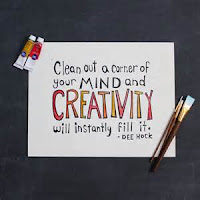 Have you ever had a teacher that let you be as creative as possible? Yes, in my Education and Training class this year. My teacher allows us to make teacher created materials with what ever materials we want, with no limitations. Our assignments are not strict, but rather a chance to show who each student really is.
How do we fix the problem(s) described by Sir Ken Robinson? I think that we should have the opportunity to take classes that would be beneficial to our major we are interested in, or get to take classes that interest us. For example, my major in college demands an Algebra class, but no Pre-Cal, so I should not have to take this class if it will not benefit me in the future. I also think that students are capable of knowing what they want to be when they are an adult, and should get to choose and start taking courses for, in the middle of high school. This would keep the students engaged in school when they are interested in the material, knowing that they are learning the topics for a reason that will benefit them in the near future.
Creativity is.... using your imagination to do things the way that you want to do it, with no rules or limitations
Why does creativity matter in education? Creativity is important in education in getting a larger variety of ideas. With no creativity, students will not try their hardest in school because, they have no interest in doing so. When students are given space to do things the way they want to, the teachers will see better results. Creativity is also important if the teachers want students who do things different, and not robotic in their actions.
Have you ever been in a situation where you felt as if your teacher didn't let you be creative? Yes, in AP English IV. Each six weeks, we get an assignment to summarize, define, and support with examples the argument made in a passage. Yes, I would agree, that there is not a large window to be creative however, our teacher gives us a specific font, layout, and size to type each of our findings. The teacher could provide a small chance for creativity by giving his students the opportunity to choose the font or layout of our project. Our teacher provides such a little space for creativity, as he has this layout for the assignment on his website, and expects us to erase his information, and fill in with our own information.
 Have you ever had a teacher that let you be as creative as possible? Yes, in my Education and Training class this year. My teacher allows us to make teacher created materials with what ever materials we want, with no limitations. Our assignments are not strict, but rather a chance to show who each student really is.
How do we fix the problem(s) described by Sir Ken Robinson? I think that we should have the opportunity to take classes that would be beneficial to our major we are interested in, or get to take classes that interest us. For example, my major in college demands an Algebra class, but no Pre-Cal, so I should not have to take this class if it will not benefit me in the future. I also think that students are capable of knowing what they want to be when they are an adult, and should get to choose and start taking courses for, in the middle of high school. This would keep the students engaged in school when they are interested in the material, knowing that they are learning the topics for a reason that will benefit them in the near future.
Saturday, February 6, 2016
My State Teach Tomorrow Summit Highlight
The following blog assignment can be found here
TAFE Website

The trip to Houston, Texas was definitely a trip to remember. Although we did not get the award of advancing to nationals, there were many things that made the trip a good one. The best part of the trip would have to of been Sunday. After waking up, eating breakfast, and attending the first general session, we traveled to the University of Houston for breakout sessions. I liked how we were able to choose the ones we went to, and how there was a very large variety. I attended one about making teacher created materials out of recycled objects, one with the author of Teach Like a Pirate, Dave Burgess, and one about working with hearing and vision impaired students, and students diagnosed with autism. I found the last breakout session very interesting. Overall, I had a great time in Houston, and I would quickly recommend this trip to my fellow TAFE members who did not participate, because it was a great chance to get closer with the future teachers in our chapter, and surround ourselves with other future teachers around the state of Texas. I can't wait for the 2017 state conference!
Pictures from our trip :)


TAFE Website
The trip to Houston, Texas was definitely a trip to remember. Although we did not get the award of advancing to nationals, there were many things that made the trip a good one. The best part of the trip would have to of been Sunday. After waking up, eating breakfast, and attending the first general session, we traveled to the University of Houston for breakout sessions. I liked how we were able to choose the ones we went to, and how there was a very large variety. I attended one about making teacher created materials out of recycled objects, one with the author of Teach Like a Pirate, Dave Burgess, and one about working with hearing and vision impaired students, and students diagnosed with autism. I found the last breakout session very interesting. Overall, I had a great time in Houston, and I would quickly recommend this trip to my fellow TAFE members who did not participate, because it was a great chance to get closer with the future teachers in our chapter, and surround ourselves with other future teachers around the state of Texas. I can't wait for the 2017 state conference!
Pictures from our trip :)


Monday, January 11, 2016
Fold It!
Click here to view the original blog post by Mrs. Kallas
There are many different types of possible foldables to make.
 The following is one I created, to help my kindergarten classroom.

Alphabet and Counting Book
- This foldable covers information that is in the Kindergarten TEKS, such as being able to recognize all of the 26 letters, and counting.
- This book gives the kids a chance to say the sound of the letter they see on each page of the small book. They also can count to 50 by ones, or 100 by 10s, and can check to see if they are doing it right when they turn the page.
- The supplies needed includes staples, and many pieces of paper, in any color, although bright colors help the students remember what they once saw.
- To create the activity you can- 1. fold a piece of paper every inch, or however big you would want the pages to be.
 2. Cut on the lines, but leave a inch or so for the end.
 3. Next, fold the paper back up, and staple the book on the end.
 4. Write in the information on the pages.
5. If you want to add more pages, use different colors of paper, repeat steps1-4, and staple it to the back of the first book to add more. - This foldable can be used as homework, or as a station. The students can bring this home, and tell to a parent, or have a partner in a station, who they can read this to. In an alphabet book, the student can see the letter, and pronounce the sound the letter makes to their partner. In the counting book, the student can start at 1, or 10, depending on their level (counting by ones, or tens) and say the following letter, before checking themselves on the next page.


Final Product-


Friday, December 4, 2015
Built for Learning
Are Schools Built for Learning?
The following blog assignment can be found on Mrs. Kallas's blog, click here to view
 My ideal learning environment would be like the picture to the right. A colorful classroom, with many decorations would welcome me each morning, and keep me engaged, rather than bored. The classroom could have a section for each subject being taught, for example, in a kindergarten class there can be a science, social studies, math and reading center. Each center can have posters and activities for that subject in its section, to keep the students moving around, and observing different things, throughout the day. The students should switch subjects while having a break from learning, so they can get all of their wiggles out. The students could, for example, play Simon Says when changing subjects. This could reward the teacher when the students work hard, because they are looking forward to their "Brain Break". I would want the desks to be in groups, so they can communicate, and learn how to work together. There would also be a carpet in the front, for the class to do things together, and meet up when learning, or having a discussion. The students would be evaluated by knowing how to complete the activities at each station by their self, and would rarely be given any tests.
Classroom Pictures:
 1. Like the one below, this classroom (to the left) has many things on the walls, which can teach the students to use their resources.
 2. These tables would work for a group, and the carpet is in the front of the classroom.
Here is a link for a website in which you can plan your own layout for your classroom.
Subscribe to:
Posts (Atom)