Friday, February 19, 2016

Creativity Counts!

Click here to view this blog prompt.
Creativity Counts! 

This is a link to Sir Ken Robinson's Website.

Here is a Video of Sir Ken Robinson's TED Talk video.
Creativity is.... using your imagination to do things the way that you want to do it, with no rules or limitations
Why does creativity matter in education? Creativity is important in education in getting a larger variety of ideas. With no creativity, students will not try their hardest in school because, they have no interest in doing so. When students are given space to do things the way they want to, the teachers will see better results. Creativity is also important if the teachers want students who do things different, and not robotic in their actions. 
Have you ever been in a situation where you felt as if your teacher didn't let you be creative? Yes, in AP English IV. Each six weeks, we get an assignment to summarize, define, and support with examples the argument made in a passage. Yes, I would agree, that there is not a large window to be creative however, our teacher gives us a specific font, layout, and size to type each of our findings. The teacher could provide a small chance for creativity by giving his students the opportunity to choose the font or layout of our project. Our teacher provides such a little space for creativity, as he has this layout for the assignment on his website, and expects us to erase his information, and fill in with our own information.
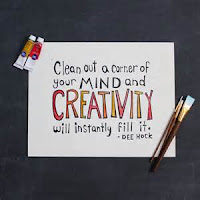
Have you ever had a teacher that let you be as creative as possible? Yes, in my Education and Training class this year. My teacher allows us to make teacher created materials with what ever materials we want, with no limitations. Our assignments are not strict, but rather a chance to show who each student really is.
How do we fix the problem(s) described by Sir Ken Robinson? I think that we should have the opportunity to take classes that would be beneficial to our major we are interested in, or get to take classes that interest us. For example, my major in college demands an Algebra class, but no Pre-Cal, so I should not have to take this class if it will not benefit me in the future. I also think that students are capable of knowing what they want to be when they are an adult, and should get to choose and start taking courses for, in the middle of high school. This would keep the students engaged in school when they are interested in the material, knowing that they are learning the topics for a reason that will benefit them in the near future.

Saturday, February 6, 2016

My State Teach Tomorrow Summit Highlight


 The following blog assignment can be found here

TAFE Website


The trip to Houston, Texas was definitely a trip to remember. Although we did not get the award of advancing to nationals, there were many things that made the trip a good one. The best part of the trip would have to of been Sunday. After waking up, eating breakfast, and attending the first general session, we traveled to the University of Houston for breakout sessions. I liked how we were able to choose the ones we went to, and how there was a very large variety. I attended one about making teacher created materials out of recycled objects, one with the author of Teach Like a Pirate, Dave Burgess, and one about working with hearing and vision impaired students, and students diagnosed with autism. I found the last breakout session very interesting. Overall, I had a great time in Houston, and I would quickly recommend this trip to my fellow TAFE members who did not participate, because it was a great chance to get closer with the future teachers in our chapter, and surround ourselves with other future teachers around the state of Texas. I can't wait for the 2017 state conference!
Pictures from our trip :)

Monday, January 11, 2016

Fold It!


Click  here to view the original blog post by Mrs. Kallas 

There are many different types of possible foldables to make.  
The following is one I created, to help my kindergarten classroom.


Alphabet and Counting Book


  • This foldable covers information that is in the Kindergarten TEKS, such as being able to recognize all of the 26 letters, and counting.
  • This book gives the kids a chance to say the sound of the letter they see on each page of the small book. They also can count to 50 by ones, or 100 by 10s, and can check to see if they are doing it right when they turn the page.
  • The supplies needed includes staples, and  many pieces of paper, in any color, although bright colors help the students remember what they once saw.
  • To create the activity you can- 1. fold a piece of paper every inch, or however big you would want the pages to be.  
    2. Cut on the lines, but leave a inch or so for the end.  
     3. Next, fold the paper back up, and staple the book on the end.
     4. Write in the information on the pages.
    5. If you want to add more pages, use different colors of paper, repeat steps1-4, and staple it to the back of the first book to add more.
  • This foldable can be used as homework, or as a station. The students can bring this home, and tell to a parent, or have a partner in a station, who they can read this to. In an alphabet book, the student can see the letter, and pronounce the sound the letter makes to their partner. In the counting book, the student can start at 1, or 10, depending on their level (counting by ones, or tens) and say the following letter, before checking themselves on the next page.
Final Product-

Friday, December 4, 2015

Built for Learning


Are Schools Built for Learning? 
The following blog assignment can be found on Mrs. Kallas's blog, click here to view


My ideal learning environment would be like the picture to the right. A colorful classroom, with many decorations would welcome me each morning, and keep me engaged, rather than bored. The classroom could have a section for each subject being taught, for example, in a kindergarten class there can be a science, social studies, math and reading center. Each center can have posters and activities for that subject in its section, to keep the students moving around, and observing different things, throughout the day. The students should switch subjects while having a break from learning, so they can get all of their wiggles out. The students could, for example, play Simon Says when changing subjects. This could reward the teacher when the students work hard, because they are looking forward to their "Brain Break". I would want the desks to be in groups, so they can communicate, and learn how to work together. There would also be a carpet in the front, for the class to do things together, and meet up when learning, or having a discussion. The students would be evaluated by knowing how to complete the activities at each station by their self, and would rarely be given any tests.
Classroom Pictures: 

 1. Like the one below, this classroom (to the left) has         many things on the walls, which can teach the students to use their resources.


 2. These tables would work for a group, and the carpet is in the front of the classroom.


Here is a link for a website in which you can plan your own  layout for your classroom. 


Monday, November 9, 2015

Learning Activity


The following blog assignment comes from Mrs. Kallas's blog page, click here to view her page.
Learning Activity
Click here to view a the board I made on the following activity, or look at the picture to your right.
This learning activity is for Kindergarteners learning their letters, and the differences between lower- and upper-case letters.

The objective of this activity is for the students to recognize which lower-case letter matches up with the corresponding capital letter.


To make this activity, buy clear and white spoons, and print the capital letters on the white spoons towards the top, with the lower-case letters on the clear spoons a little lower, so when put on the white spoon, you will be able to view both of the letters.

The following materials are needed to create this activity: 1. White spoons 2. Clear spoons 3. Two different color permanent markers


This activity can be used to 1) test the students 2) to have a competition between two groups to see which one can match them up quicker, or 3) make a station for the students to match these up on their own.

Find the Treasure in Teaching

The following blog prompt is in reply to Mrs. Kallas's blog, click here to view.

On Wednesday, October 28th, I participated in the Ethical Dilemma Competition at Region XI's TAFE Competition. I decided to participate in a group competition. I enjoyed the Ethical Dilemma competition because, it gave me an insight on the struggles that teachers are faced with. After this competition, I realized that this was a very good choice for the TAFE competition. The few difficulties that we were faced with were the different views of our fellow classmates when having to decide on only one outcome, and the different views on each of the group members on deciding how to do the project. I enjoyed getting closer with my classmates, and investigating the dilemma presented in the competition we chose. If I got the choice to restart, or do the project again, there is nothing that I would change. I am looking forward to going to Houston University with members of the BCTAL chapter for the state conference on January 29th, 2016.

These are a few pictures of our day at TCU for the TAFE Region Leadership Conference.Mackynzi Andrews and I at the awards ceremony

Breakout Session

 Lauren, Allison, Lindsey and I receiving our certificate for 1st place, and state qualifiers.

 Working a Breakout Session


Tuesday, October 13, 2015

My First Day as an Intern!

This blog assignment can be found here.


Thursday, October 8th, was my first day at my field site. I am interning at Walker Creek Elementary in Mrs. Vinson's kindergarten class. This is Mrs. Vinson's 8th year of teaching, and 2nd year of teaching kindergarten. Click here to visit Mrs. Vinson's website.
I prepared for my first day of my internship and brought a poster along to introduce myself. I wore my Intern button up shirt with jeans, converse, and a striped shirt underneath. I did my introduction to the students as soon as I walked into the classroom, and brought along my poster and a good attitude. When I first walked into my field site classroom, I felt very welcomed and excited to be there. When I was in the classroom, I helped the students sound out words, and helped them in their math stations. I worked hard to memorize the students' names, and get to know more about each one.
I felt very loved, and I'm so excited to go back this week. I am most looking forward to helping the students learn, and helping them learn to have the same kind of passion for school that I had in kindergarten. Not only do I want to help them grow intelligently, but I also want to help them grow as people, and be able to provide for their needs.


                                                                                                                           This is a picture of Mrs. Vinson :)